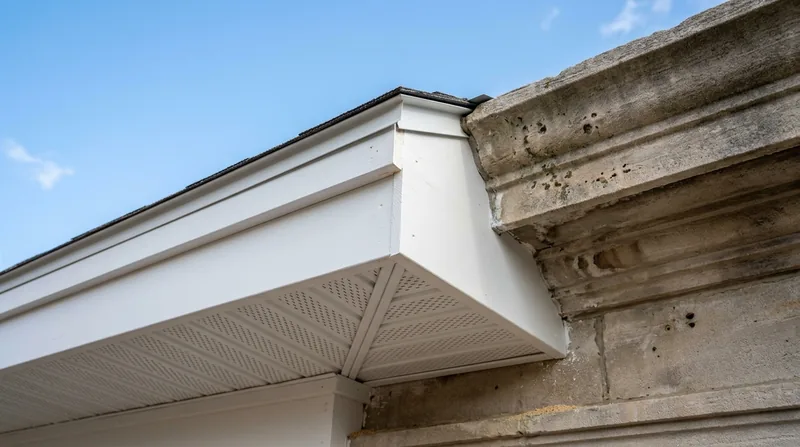




Peeling paint and soft fascia boards are often the first sign of ice-dam moisture working behind the roofline after a heavy Chicago winter. Fascia, soffit and exterior trim repair in Chicago is not cosmetic work, it is structural defense. The freeze-thaw cycles that pound this city from November through March drive moisture behind the roofline, through the soffit and into the rafter tails, rim joist, and sill plate where wood begins to fail. We replace fascia, soffits and exterior trim with primed, rot-resistant material, closing the gaps that let winter moisture and pests into the roofline and walls. The work is straightforward carpentry, but the timing and material choice matter enormously in a climate where ice dams and wind-driven rain are routine.
Why Fascia and Soffit Failure Accelerates in Chicago's Winter Climate
Chicago's iconic bungalows, greystones, and two-flats were built to shed water, but 90 years of freeze-thaw cycles take their toll. Ice dams trap meltwater against the fascia board and soffit, forcing moisture into the rafter tail and rim joist. Gutters clogged with oak and elm leaves hold standing water through the winter. Peeling paint, soft wood, and daylight gaps between fascia and rafter are not just aesthetic problems, they are entry points for rot, pest access, and structural decay.
- Trapped moisture behind the fascia leads to wood rot in the rafter tail and rim joist within two to four seasons.
- Gaps and deteriorated trim invite pest entry into wall cavities and attic spaces.
- Peeling paint indicates water infiltration and signals that the wood underneath is beginning to soften.
- Sagging or warped soffit panels mean the fastening structure is losing integrity and water is pooling inside.
Catching this early, when the fascia board itself is the problem and the rafter tail is still sound, costs far less than replacing the rafter tail and rim joist later.
Key info: In neighborhoods like Ravenswood, Lincoln Square, and the Bungalow Belt, the combination of flat roofs, heavy snow load, and ice dams creates chronic fascia and soffit problems. Spring thaw reveals the damage; fall is the window to repair before winter returns.
For more information on how moisture damage progresses, see our guide to wood rot and dry rot repair in Chicago.
How We Replace Fascia, Soffit and Exterior Trim
We start by inspecting the full run of fascia, soffit, and trim from ground level and from a ladder. We look for soft spots, paint failure, gaps, and signs of pest activity. If the fascia board is rotted but the rafter tail is sound, we replace the fascia and soffit only. If the rafter tail has begun to fail, we discuss options for sistering or partial replacement. We then remove the old material, inspect the framing underneath, and install new primed boards in rot-resistant species or composite material, sealed and fastened to prevent future moisture entry.
- We inspect the full perimeter of fascia, soffit, and trim, identifying soft wood, gaps, and pest entry points.
- We remove damaged fascia and soffit boards carefully to avoid disturbing gutters or roof flashing.
- We inspect the rafter tail and rim joist for rot; if sound, we proceed with fascia and soffit replacement only.
- We install new fascia and soffit in primed, rot-resistant material, sealed at all seams and fastened with corrosion-resistant fasteners.
- We caulk and seal the joint between fascia and rafter tail to block moisture entry.
- We paint or stain the new trim to match the existing exterior or your preferred finish.
The entire job typically takes one to three days depending on the linear footage and whether the rafter tail requires repair.
Example: A typical Chicago bungalow in Pilsen or Bridgeport has 120 to 140 linear feet of fascia and soffit. Replacing all of it with primed cedar or composite material, including inspection and sealing, runs three to five days and costs from $2,100 to $3,500 depending on material choice and whether the rafter tail needs work.
For related exterior carpentry work, see our exterior and entry door installation service.
Fascia, Soffit and Exterior Trim Repair Methods and Materials
| Material | Description | Best for |
|---|---|---|
| Primed cedar | Solid wood, naturally rot-resistant, takes stain or paint well, requires maintenance every 5 to 7 years. | Historic homes, traditional aesthetics, owners comfortable with regular painting. |
| Composite fascia and soffit | Engineered wood fiber and resin, no painting required, lasts 20 to 25 years, slightly higher upfront cost. | Homeowners seeking low maintenance, Chicago's harsh winters, long-term durability. |
| Aluminum fascia with composite soffit | Metal fascia covers wood, composite soffit, hybrid approach balances cost and durability. | Mixed-material exterior, moderate budget, moderate maintenance. |
| Partial fascia and soffit replacement with rafter tail sistering | We replace fascia and soffit, and sister a new timber to the rotted rafter tail to restore structural integrity. | Jobs where rot has begun in the rafter but framing is otherwise sound and repair is more cost-effective than full replacement. |
Fascia, Soffit and Exterior Trim Repair Cost in Chicago: What to Expect
Fascia and soffit repair in Chicago starts at $700 for small sections and typically ranges from $1,800 to $4,500 for a full perimeter replacement on a standard residential home. The cost depends on the linear footage, material choice, whether the rafter tail requires repair, and the complexity of the existing trim and flashing. A Chicago bungalow with 120 linear feet of fascia and soffit will cost more than a small ranch with 80 linear feet. Composite material costs more upfront than painted cedar but eliminates the need for repainting every five to seven years. If the rafter tail is rotted and requires sistering or partial replacement, the cost rises accordingly.
- Linear footage is the primary cost driver, with most homes ranging from 80 to 160 feet of fascia and soffit.
- Material choice matters: cedar costs less initially but requires maintenance; composite costs more upfront but is maintenance-free.
- Rafter tail or rim joist repair, if needed, adds $400 to $1,200 depending on the extent of sistering or replacement.
- Access and ladder work on multi-story homes or homes with complex rooflines may increase labor cost by 10 to 20 percent.
- Gutter removal and reinstallation, if necessary, is typically included in the estimate but quoted separately if gutters need replacement.
We recommend getting a free estimate before committing to any work. The estimate includes a detailed inspection, material recommendations, and a transparent line-item quote. For a full overview of our pricing structure across all services, see our pricing page.
Fascia, Soffit and Exterior Trim Repair Near Me: What to Look for When Hiring a Carpentry Contractor in Chicago
When you are ready to hire a carpenter for fascia, soffit, and exterior trim repair in Chicago, focus on three things: experience with Chicago's climate and building types, a clear written estimate, and the contractor's willingness to explain what they find and why. Ask for references from recent jobs in your neighborhood. Verify that the contractor is fully insured and carries general liability and workers compensation coverage. Request a detailed estimate that breaks down material costs, labor, and any site-specific work like rafter inspection or gutter removal.
- Confirm the contractor is fully insured with current general liability and workers compensation certificates available upon request.
- Ask for at least two references from similar jobs in Chicago completed within the past two years.
- Request a written estimate that itemizes fascia and soffit material, labor, rafter inspection, and any additional repairs discovered on site.
- Clarify the timeline: most fascia and soffit jobs complete in one to three days, and weather delays should be anticipated in spring and fall.
- Ask whether the contractor will inspect the rafter tail and rim joist as part of the estimate, and what they recommend if rot is found.
- Verify that the contractor will handle permit coordination if required by your municipality or HOA for exterior work.
Chicago's building department and many neighborhood associations have requirements for exterior work. Before hiring, check with your local aldermanic office or building department to confirm whether a permit is needed for fascia and soffit replacement in your area. Some historic districts and HOAs require approval for material and color changes. A good contractor will help you navigate these requirements and coordinate with the appropriate departments. Call us at (312) 685-4329 for a free estimate, or visit our contact page to request a consultation.
Fascia, Soffit & Exterior Trim Repair in Chicago: Pricing Guide
| Service | Price | Details |
|---|---|---|
| Small fascia or soffit section | Starting at $700 | Repair or replacement of less than 30 linear feet, typically one side of a single-story structure |
| Full fascia and soffit replacement | Starting at $1,800 | Complete perimeter on a standard Chicago bungalow or ranch, 80 to 120 linear feet, primed wood or composite material |
| Fascia, soffit and rafter tail repair | Starting at $2,400 | Full perimeter replacement plus sistering or partial rafter tail replacement, includes framing inspection and sealing |
| Multi-story or complex roofline job | On estimate | Fascia and soffit on two-story or three-flat buildings, or homes with dormers and complex trim details, requires site inspection |
| Travel and consultation | Included | Free estimate within 24 hours across Chicago and surrounding service areas, no mileage charge or call-out fee |
| Material upgrade to composite | Add 15 to 25 percent | Upgrade from primed cedar to composite fascia and soffit for maintenance-free durability, longer service life |
Indicative pricing, the exact cost depends on square footage, finish, and site access. Free personalized estimate within 24h at (312) 685-4329.


