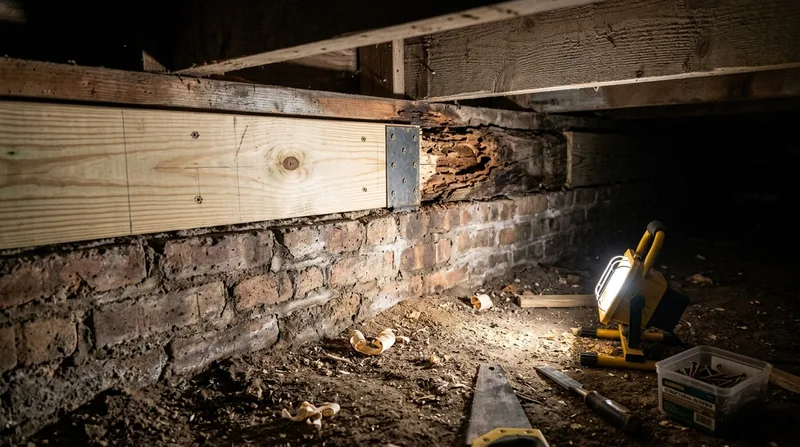




Chicago's humid summers bring genuine termite pressure to the region's older homes, and when an exterminator eliminates the colony, the damaged wood remains. We handle termite damage repair across Chicago's iconic bungalows, greystones, two-flats, and Victorian homes by replacing termite-eaten studs, sill plates, rim joists, trim, and subfloor sections. Working from your pest inspection report, we restore full structural integrity to the framing and floor systems that termites have compromised. The flat glacial terrain and freeze-thaw cycles of the Midwest, combined with lake-effect snow and summer humidity, create an environment where termite colonies thrive in untreated wood. Chicago Carpentry has been repairing termite damage since 2016, replacing the wood that pest control cannot touch and ensuring your home's frame is sound again.
Why Termite Damage Repair Matters in Chicago's Older Neighborhoods
Termites work slowly and silently, hollowing out wood from the inside while the surface appears intact. Once a pest inspector confirms an infestation, the exterminator addresses the colony, but the structural damage they left behind remains your responsibility. Chicago's dense housing stock from the 1910s through 1930s, particularly the iconic bungalow belt across the North and South Sides, relies on wood framing that termites find highly palatable. Ignoring damaged wood allows rot to accelerate, floor joists to weaken further, and repair costs to climb significantly over time.
- We remove termite-damaged studs, sills, and trim members and replace them with pressure-treated or sound wood matched to the original species and dimension.
- We repair or sister floor joists and subfloor sections that termites have compromised, restoring load capacity and preventing sagging floors.
- We document all repairs with photographs and written scope, helping you file a claim with your homeowner's insurance if termite damage is a covered loss.
- We work from your pest inspection report, coordinate with your exterminator, and ensure all damaged wood is replaced before the site is closed up.
Addressing termite damage promptly prevents secondary wood rot, mold growth in voids, and structural failure that can affect the entire framing system.
Key info: Chicago's older homes, especially those built before 1940 in neighborhoods like Bucktown, Logan Square, and the Bungalow Belt, often have untreated wood sill plates and rim joists that sit close to grade or damp basements, creating ideal conditions for termite colonies. A single inspection report showing damage to these critical members can trigger a repair bill of $3,000 to $8,000 or more if the damage is extensive.
For more information on wood damage and repair strategies, see our guide to wood rot and dry rot repair in Chicago, which covers similar framing pathologies and replacement approaches.
The U.S. Department of Agriculture provides detailed guidance on termite biology and prevention for homeowners at USDA.gov, including species identification and regional risk factors.
How We Repair Termite Damage: Our Process in Chicago Homes
Every termite damage job begins with your pest inspection report, which identifies the species, location of damage, and severity. We schedule an on-site visit to assess the extent of wood loss, determine which members can be repaired or sistered and which must be replaced entirely, and establish a work plan that restores structural integrity without unnecessary replacement. Chicago's older homes often have plaster walls, brick exterior, and tight spaces that require careful carpentry to access and repair damage without disrupting the surrounding finish.
- We inspect the damaged area, probe wood with an awl to confirm loss, and measure the remaining sound wood in each member.
- We remove termite-damaged sections of studs, sills, joists, or trim using reciprocating saws and hand tools, working carefully around plaster, brick, or adjacent finish.
- We cut new wood members to match the original species, dimension, and grade, using pressure-treated lumber where the member is below grade or at high moisture risk.
- We install the new wood using structural fasteners, blocking, and shims to restore full bearing and load transfer to adjacent members.
- We seal exposed wood with an appropriate finish or primer to prevent future moisture intrusion.
- We photograph the completed repair and provide a written scope of work for your insurance documentation.
The entire process typically takes one to three days, depending on the number of damaged members and the complexity of accessing them within the existing structure.
Real example: A homeowner in Oak Park discovered termite damage to the rim joist and two floor joists supporting the first floor. The exterminator treated the colony, and we removed the damaged rim joist section and sistered new 2x10 joists alongside the compromised originals, using galvanized bolts and blocking. The repair took two days and cost $2,800. Without the repair, the floor would have continued to sag, and secondary damage to the subfloor and finish would have followed within 18 months.
For complex jobs involving multiple joists or load-bearing walls, see our service page on floor joist and subfloor repair, which covers the full range of structural floor solutions.
Termite Damage Repair Methods and Approaches
| Approach | Description | Best for |
|---|---|---|
| Partial member replacement | Remove only the damaged section of a stud, joist, or sill and splice in new wood using structural fasteners and blocking. | Damage limited to one or two areas of a single member, leaving sound wood at bearing points. |
| Sistering | Install a new joist or stud alongside a compromised member, bolted together to share the load and restore capacity. | Floor joists weakened by termites but still partially sound; avoids removal of finished flooring or disruption to the home. |
| Full member replacement | Remove the entire damaged member and install a new one of matching dimension, species, and grade. | Extensive loss across the member, damage at critical bearing points, or where sistering is impractical due to space or access. |
| Subfloor patching | Remove damaged subfloor planks and install new plywood or tongue-and-groove boards, securing to joists with ring-shank nails or screws. | Termite damage confined to the subfloor layer, with joists still sound or already repaired. |
| Trim and casing replacement | Remove damaged trim, baseboard, or door casing and install new pieces in the original profile and finish. | Termites have damaged finish carpentry elements that do not carry structural load but affect appearance and seal the wall. |
Each approach is chosen based on the location and severity of damage, the structural role of the member, and the cost-benefit of repair versus replacement. We explain the reasoning behind our recommendation and the expected outcome before we begin work.
Termite Damage Repair Cost in Chicago: What to Expect
The cost of termite damage repair in Chicago ranges widely depending on the number of damaged members, the species and dimension of wood involved, access difficulty, and whether the damage is localized or spread across multiple areas of the home. A single damaged rim joist section or a few linear feet of sill plate repair typically starts at around $1,200 to $2,000, while more extensive damage affecting multiple joists, studs, or large subfloor areas can reach $4,000 to $8,000 or more. Jobs involving structural members that require engineered sizing or permit approval will be quoted on a case-by-case basis after a full inspection.
Factors that drive cost include the number of members affected, whether the damage is above or below grade (below-grade repairs often require pressure-treated lumber and additional sealing), access constraints in older homes with tight crawl spaces or finished basements, and whether the repair requires temporary support or bracing of the structure above. We always recommend getting two or three estimates to understand the range of approaches and pricing in your area.
For a detailed breakdown of our pricing and how we structure estimates, visit our pricing page. We provide a free estimate within 24 hours and can discuss your specific damage scenario by phone at (312) 685-4329.
Many homeowners find that their homeowner's insurance covers termite damage if the policy includes coverage for wood-destroying insects. We can photograph and document the repair scope to support your claim, though final coverage decisions rest with your insurance company.
Hiring a Termite Damage Repair Carpenter Near Me: What Chicago Homeowners Should Know
Finding a qualified carpenter for termite damage repair requires checking that the contractor is fully insured, has verifiable experience with structural carpentry in older homes, and can clearly explain the repair approach and timeline before starting work. Chicago's diverse housing stock, from century-old bungalows to Victorian greystones and modern subdivisions, demands carpenters who understand the framing conventions and finish details specific to each era. Ask potential contractors for references from recent termite damage jobs, and contact those homeowners directly to confirm the quality of work and professionalism.
When evaluating contractors, request a written scope of work that names the specific members to be replaced or repaired, the materials to be used, and the total cost. If the job involves a load-bearing wall or a structural alteration, confirm that the contractor understands whether a permit and engineer's approval are required by contacting your local building department. Many Chicago neighborhoods and suburbs have historic district or HOA requirements that may affect materials, finish, or approval timelines, so clarify these constraints upfront.
Chicago Carpentry is fully insured and has been repairing termite damage and wood rot in Chicago homes since 2016. We provide free estimates and can discuss your repair options by phone at (312) 685-4329 or through our contact page. We work across Chicago and surrounding areas including Evanston, Oak Park, Naperville, Schaumburg, and beyond, and we explain every repair in plain language so you understand what is being done and why.
Termite Damage Repair in Chicago: Pricing Guide
| Service | Price | Details |
|---|---|---|
| Single member repair or sistering | Starting at $1,200 | Partial stud, joist, or sill replacement, or sistering one joist alongside a compromised member |
| Multiple member repair or extensive damage | Starting at $3,500 | Two or more damaged members, extensive subfloor patching, or combination of structural and trim repairs |
| Large-scale structural repair | On estimate | Damage affecting rim joist, multiple floor joists, sill plate, or requiring temporary support or bracing during repair |
| Travel | Included | No separate mileage or call-out fee within Chicago and surrounding service areas |
| Free estimate | Free | Response within 24 hours at (312) 685-4329, includes site inspection and written scope of work |
Indicative pricing, the exact cost depends on square footage, finish, and site access. Free personalized estimate within 24h at (312) 685-4329.


