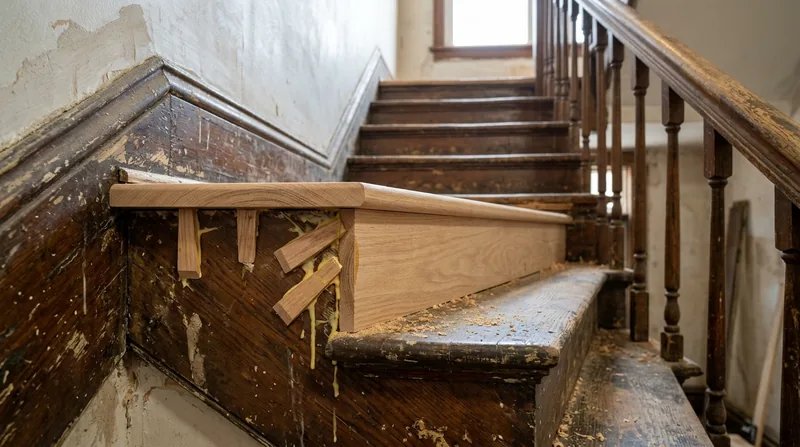




Chicago's iconic staircases, from the steep attic climbs in 1920s bungalows to the grand period railings in Gold Coast brownstones, take a beating from the city's freeze-thaw cycles, heavy foot traffic, and decades of seasonal moisture swings. Stair and railing repair in Chicago demands carpenters who understand wood movement, load paths, and the structural reality that a squeaky tread or loose baluster often signals deeper wear in the stringer or newel post. We repair and rebuild the staircases that Chicago homeowners climb every day, restore period railings to their original detail, and install code-compliant handrails and attic ladders that work safely in tight spaces. Whether your bungalow's treads are worn soft, your two-flat's banisters rock side to side, or your Victorian's ornamental rail needs reinforcement, we start by diagnosing what's failed and proposing repair before replacement whenever the wood justifies it.
Why Stair and Railing Repair Matters in Chicago's Older Homes
Chicago's residential stock, dominated by bungalows, two-flats, and three-flats built from the 1910s through the 1930s, was constructed with wood stringers, treads, and railings designed for a different climate and different use patterns. Over nearly a century, seasonal moisture cycles, termite pressure that rises with summer humidity, and millions of footsteps have loosened fasteners, softened treads, and cracked or split stringers. A railing that rocks is not just annoying; it signals that the newel post connection has failed or the baluster tenons have pulled free. Worn treads create a genuine trip hazard, especially on the steep pitches common in Chicago bungalows where headroom is tight and every inch of tread matters. Code compliance has also shifted: older homes built with minimal handrails or open railings now need to meet current safety standards, whether for insurance, resale, or simply living safely as you age in place.
- Squeaky or soft treads signal fastener failure or wood compression in the tread itself, and must be addressed before they become a collapse risk.
- Loose balusters and wobbly railings mean the tenon-and-mortise joints or lag bolts holding the spindles have failed, compromising fall protection.
- Worn or cracked stringers (the angled boards that carry the treads) need reinforcement or replacement to maintain safe load distribution.
- Missing or inadequate handrails do not meet current code and expose you to liability if a visitor is injured.
- Period railings in older Chicago homes often require careful restoration to preserve original detail while meeting modern safety standards.
Addressing these issues promptly protects your family, ensures code compliance, and preserves the character and value of your home.
Local context: Chicago's freeze-thaw cycles and summer humidity create ideal conditions for wood movement and fastener corrosion. A staircase that was rock-solid in 1960 may have significant play by 2024, especially if the original fasteners were nails rather than lag bolts or screws. This is not a sign of poor original construction; it is a sign that the wood has moved, the fasteners have rusted or worked loose, and repair is overdue. For permit guidance on stair or railing alterations in Chicago, contact your local building department to confirm whether a permit is required for your specific work.
How We Repair and Rebuild Staircases in Chicago
Every staircase repair begins with a walk-through and a diagnosis. We look for soft spots in the treads, measure play in the balusters and railings, inspect the stringer for cracks or rot, and check fastener condition. Once we understand what has failed and why, we propose the most cost-effective fix: sometimes that is tightening lag bolts and replacing fasteners; sometimes it is sistering a cracked stringer with new wood glued and bolted alongside the original; sometimes it is replacing individual treads or sections of the railing. We explain the options plainly and let you decide whether to repair or replace.
- We inspect the entire staircase for soft wood, loose fasteners, cracks, and movement, documenting findings and photographing areas of concern.
- We propose repair or replacement for each component, explaining why and what the cost difference is between the two approaches.
- Once you approve, we remove balusters, treads, or sections of the stringer as needed, working carefully to avoid damage to adjacent trim or wall finishes.
- We repair or replace the damaged wood, using new fasteners (stainless steel lag bolts or structural screws) and epoxy or glue-and-bolt techniques to restore strength.
- We reinstall balusters, treads, and railings, checking that all components are secure and that the staircase meets current code for handrails and baluster spacing.
- We sand, stain, or finish the repaired sections to match the original, ensuring the repair is invisible or period-appropriate.
The result is a staircase that is safe, code-compliant, and looks like it was always part of your home.
Example from the field: A homeowner in Oak Park called us about a Victorian staircase where the newel post rocked when you grabbed the railing. We found that the lag bolts connecting the newel to the stringer had corroded and loosened, and the tenons on two of the upper balusters had cracked. We replaced the fasteners with stainless steel, epoxied and re-tenoned the balusters, and reinforced the newel connection with a sister block glued and bolted to the existing post. The railing is now solid, the original detail is preserved, and the repair cost a fraction of replacing the entire railing.
Stair and Railing Repair Methods
| Approach | Description | Best for |
|---|---|---|
| Fastener replacement | Remove corroded nails or bolts and replace with stainless steel lag bolts or structural screws, re-tightening all connections. | Loose balusters, wobbly railings, squeaky treads caused by fastener failure or corrosion. |
| Tread repair or replacement | Remove worn or soft treads, repair the underlying stringer if needed, and install new treads glued and fastened to the stringers. | Squeaky, soft, or splintered treads; minor damage to one or two steps. |
| Stringer sistering and reinforcement | Glue and bolt a new or reinforced sister board alongside a cracked or weakened stringer to restore load capacity. | Cracks or splits in stringers; sagging or bouncy stairs; staircase that has shifted over decades. |
| Baluster and railing restoration | Remove balusters, re-tenon or re-mortise joints, replace fasteners, and reinstall with epoxy and lag bolts for lasting security. | Period railings in Victorian or older homes; loose or cracked balusters; ornamental detail that must be preserved. |
| Handrail installation and code compliance | Install new handrails that meet current code for diameter, height, and clearance; ensure baluster spacing complies with safety standards. | Older homes with missing or inadequate handrails; renovations or resale where code compliance is required. |
Stair and Railing Repair Cost in Chicago: What to Expect
Stair and railing repair in Chicago typically starts at around $600 for straightforward work like replacing fasteners, tightening connections, or repairing a single squeaky tread. From there, cost depends on the scope of the damage, the number of treads or balusters that need attention, and whether the stringer itself requires reinforcement or replacement. A full staircase with multiple loose balusters, worn treads, and a cracked stringer may run $2,500 to $5,000 or more. Period restoration work in older homes often costs more because we must carefully remove and reinstall ornamental balusters and railings without damaging the original detail. Getting two or three estimates from local carpenters is smart: it lets you compare approaches and understand why one contractor proposes repair while another suggests replacement. For a detailed breakdown of pricing for your specific situation, visit our pricing page or call for a free estimate at (312) 685-4329.
Factors that move the cost up include the number of treads or balusters involved, whether the stringer needs reinforcement or replacement, the complexity of period detail that must be matched, access challenges (narrow basements, tight attic stairs), and whether the work requires a permit. If your staircase has rot or termite damage in the wood itself, that also adds cost because we must remove and replace the damaged material; however, we can often salvage the stringer or treads if the damage is localized. Travel is included in Chicago and surrounding areas, so there is no separate call-out fee.
Stair and Railing Repair Near Me: What Chicago Homeowners Should Know When Hiring a Carpenter
Finding the right carpenter for stair and railing repair means looking beyond the lowest bid and checking whether the contractor understands the pathology of your staircase and proposes repair before replacement. A carpenter who listens, asks questions, and explains what he or she finds is more likely to deliver a thoughtful, cost-effective fix than one who arrives with a predetermined plan. Always verify that the contractor is fully insured and can provide proof of coverage; ask for references from recent jobs in your neighborhood; and confirm that they understand Chicago building code for handrails, baluster spacing, and any permit requirements that apply to your work. Some Chicago neighborhoods and older housing stock may have historical district guidelines or HOA rules that affect railing design or materials, so check those before work begins. Getting a written estimate that itemizes labor, materials, and the specific repairs proposed protects you and ensures there are no surprises when the job is done. Contact us at (312) 685-4329 for a free, no-obligation estimate, and we will walk you through exactly what we find and what we recommend.
Stair & Railing Repair in Chicago: Pricing Guide
| Service | Price | Details |
|---|---|---|
| Fastener replacement and tightening | Starting at $600 | Loose balusters, squeaky treads, or wobbly railings caused by corroded or loose fasteners; includes new stainless steel hardware. |
| Single tread repair or replacement | Starting at $800 | One or two worn or soft treads; includes removal, inspection of the stringer, and installation of new tread with finish. |
| Stringer reinforcement or sistering | Starting at $1,200 | Cracked or weakened stringer; includes glue, bolts, and new sister board to restore full load capacity and eliminate bounce. |
| Multi-step restoration with baluster work | $2,500 to $5,000+ | Multiple treads, loose balusters, railing restoration, and possible stringer reinforcement; scope and period detail drive the final cost. |
| Handrail installation and code compliance | Starting at $400 | New handrail meeting current code; includes mounting hardware, finish, and verification of baluster spacing and safety standards. |
| Free estimate | No charge | On-site inspection, diagnosis, and written proposal within 24 hours; no obligation to book; call (312) 685-4329. |
Indicative pricing, the exact cost depends on square footage, finish, and site access. Free personalized estimate within 24h at (312) 685-4329.


