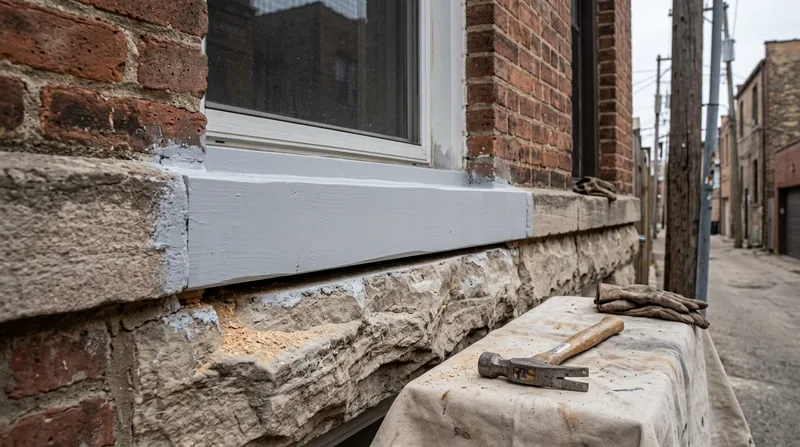




Wood rot and dry rot repair in Chicago is a cornerstone service for homeowners across the city's brick bungalows, greystones, and Victorian-era residences. Chicago's humid summers and brutal freeze-thaw winters create the perfect environment for wood decay, especially in the framing, siding, trim, and exterior woodwork that define the city's architectural character. The combination of lake-effect moisture, seasonal temperature swings, and the sheer age of much of Chicago's housing stock means wood rot isn't a rare problem, it's inevitable. We cut out decayed wood, treat surrounding framing against future moisture intrusion, and rebuild with rot-resistant lumber, delivering a permanent repair rather than a cosmetic patch. If you've noticed soft spots in window trim, sagging porch beams, or crumbling fascia in neighborhoods like Lincoln Square, Pilsen, or the Gold Coast, you're looking at a wood rot situation that demands professional attention.
Why Wood Rot and Dry Rot Repair Matters in Chicago's Climate
Chicago's freeze-thaw cycles are relentless. Water enters wood through cracks, paint failure, or poor drainage, then expands when it freezes and contracts when it thaws. Over a single winter, this cycle can accelerate decay exponentially. Exterior trim, window casings, sill plates, and porch structures bear the brunt of this assault. Ignoring early signs of rot means the damage spreads deeper into framing, eventually compromising structural integrity and creating costlier repairs down the line.
- Water penetration through failed caulk, paint, or flashing is the primary driver of wood rot in Chicago homes.
- Freeze-thaw cycles accelerate decay in exterior woodwork far faster than in milder climates.
- Early intervention stops rot from spreading into floor joists, rim joists, and load-bearing framing.
- Properly rebuilt wood with drainage and ventilation details prevents the same failure from recurring.
Addressing rot early saves thousands in structural repairs later. For detailed information on related structural issues, see our floor joist and subfloor repair service.
Chicago reality: A brick bungalow in Bucktown with rotted window trim and a failing porch fascia can develop soft floor joists within two seasons if moisture is allowed to wick into the rim joist and band board. Catching and repairing the trim and fascia stops the problem at the source.
For guidance on permits and building code requirements in Chicago, homeowners can consult the City of Chicago Department of Buildings regarding any structural repairs that may require approval.
How We Repair Wood Rot: The Process in Chicago Homes
Our approach is straightforward: we identify the extent of decay, remove all compromised wood, treat the surrounding framing to arrest moisture, and rebuild using rot-resistant lumber and proper drainage details. We don't patch cosmetically or hide problems under paint. We expose the pathology, fix it permanently, and restore functionality. Whether it's a window casing in a Lakeview brownstone or a porch header in a South Side bungalow, the method is the same: cut, treat, rebuild, detail for drainage.
- We inspect the affected area and probe to determine the depth and extent of decay.
- We remove all soft or compromised wood, cutting back to sound material.
- We treat the exposed framing with a wood preservative to inhibit future fungal growth.
- We rebuild the removed section with pressure-treated lumber or naturally rot-resistant species.
- We seal and detail the repair to shed water and prevent moisture reaccumulation.
- We finish the repair to match the surrounding woodwork in appearance and function.
This systematic approach ensures that rot doesn't creep back in through missed pockets or poor detailing.
Real example: A homeowner in Oak Park noticed soft wood around a second-story window. We opened the trim, found decay had penetrated 3 inches into the underlying framing. We removed all rotted wood, treated the surrounding studs and header, replaced the damaged section with treated lumber, and installed new casing with proper flashing. The window is now sealed and the framing is protected. Total time: two days.
For larger structural issues involving joists, beams, or load-bearing walls, see our beam replacement and structural carpentry services.
| Approach | Description | Best for |
|---|---|---|
| Localized repair | Remove decayed section, treat framing, rebuild with rot-resistant lumber. | Window trim, door casings, fascia, or small porch repairs affecting less than 25% of a member. |
| Full member replacement | Remove entire rotted board or joist, install new pressure-treated or naturally resistant lumber. | Sill plates, rim joists, porch beams, or fascia boards where decay is extensive. |
| Sistering | Install a new sister joist or beam alongside a weakened but repairable member, bolted and nailed together. | Floor joists or beams with moderate decay where structural load must be shared and maintained. |
| Moisture control upgrade | Install or improve flashing, caulk, vents, and gutters to prevent water from reaching wood in the first place. | Prevention and long-term protection in areas prone to recurring rot, such as eaves or porch undersides. |
Wood Rot and Dry Rot Repair Cost in Chicago: What to Expect
Wood rot repair in Chicago typically starts at $650 for localized trim or casing work and scales upward based on the extent of decay, the structural members involved, and accessibility. A small window casing repair might run $800 to $1,200. A porch fascia or soffit replacement could range from $1,500 to $3,500 depending on the linear footage and whether structural framing underneath is also compromised. Floor joist or rim joist repair, which involves greater structural consequence, typically runs $2,500 to $6,000 or more per affected area, depending on the number of joists and the depth of decay.
Several factors move the price within and above these ranges. The size and depth of decay determines how much wood must be removed and replaced. Accessibility matters, too, if the rotted area is in a crawlspace, attic, or high exterior wall. The species of wood being replaced affects material cost (pressure-treated lumber is standard and affordable; naturally rot-resistant woods like redwood or cedar cost more but last longer). Surrounding framing damage discovered during the repair, such as soft joists or studs, extends the scope. And moisture source remediation, such as installing proper flashing or improving drainage, adds cost but prevents recurrence.
We always recommend getting two to three estimates before committing. Different contractors may propose different scopes, and comparing them helps you understand the pathology and the appropriate solution. For a detailed breakdown of our pricing and to request a free estimate, visit our pricing page or call us at (312) 685-4329.
Wood Rot and Dry Rot Repair Near Me: What Chicago Homeowners Should Know When Hiring a Contractor
Finding a trustworthy carpentry contractor for wood rot repair requires more than a quick online search. You're making a structural decision that affects your home's longevity and safety. Look for a contractor who is fully insured, explains the pathology clearly, and proposes repair over replacement whenever the wood justifies it. Ask for references from recent jobs in your neighborhood, Evanston, Oak Park, or Naperville, and call them to verify the work quality and professionalism.
Get multiple estimates in writing, each detailing what wood will be removed, what preservative or treatment will be applied, what new material will be installed, and what moisture control details will be added. Don't assume the lowest bid is the best; the contractor who explains the problem most clearly and proposes the most durable solution is usually the right choice. Check whether the contractor understands local building code requirements and can advise you on whether a permit is needed. Structural repairs, including sistering joists or replacing load-bearing members, commonly require a permit from the City of Chicago Department of Buildings, and a professional contractor will guide you through that process.
If you're in a historic district or a neighborhood with HOA restrictions, confirm that the contractor understands those constraints and can work within them. Some exterior repairs in older Chicago neighborhoods may require approval before work begins. For more information or to schedule a free consultation, contact us today.
Wood Rot & Dry Rot Repair in Chicago: Pricing Guide
| Service | Price | Details |
|---|---|---|
| Localized trim or casing repair | Starting at $650 | Window trim, door casing, or small fascia section repair; cost scales with linear footage and decay depth |
| Porch or exterior fascia repair | Starting at $1,500 | Fascia, soffit, or porch beam repair; includes removal, treatment, and rebuild with rot-resistant lumber |
| Floor joist or rim joist repair | Starting at $2,500 | Structural repair including sistering or replacement of compromised joists; requires on-site inspection for accurate estimate |
| Comprehensive structural repair | On estimate | Multiple members affected, moisture source remediation, or extensive framing replacement; requires detailed inspection and proposal |
| Travel and consultation | Included | Free estimate and site visit throughout Chicago and surrounding service areas; no mileage or call-out fees |
| Estimate | Free | Response within 24 hours at (312) 685-4329; detailed written estimate provided; no obligation to book |
Indicative pricing, the exact cost depends on square footage, finish, and site access. Free personalized estimate within 24h at (312) 685-4329.


