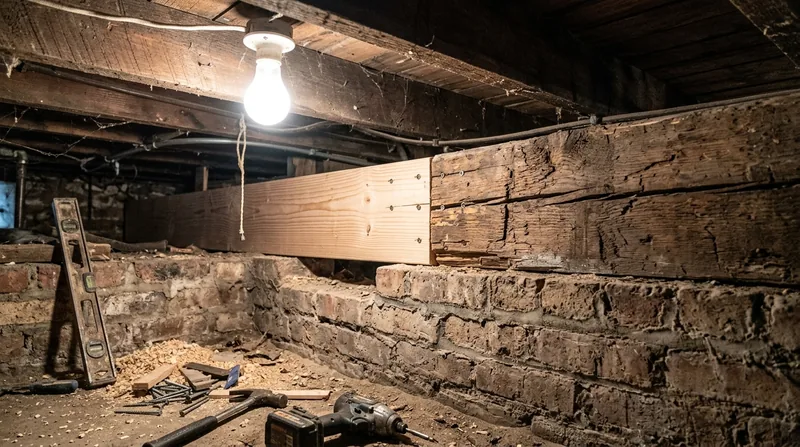




Chicago's iconic bungalows, two-flats, and greystone rowhouses built across the Bungalow Belt from the 1910s through the 1930s rest on wooden floor systems that have carried a century of weight and weather. Sagging floors, soft spots, and bounce underfoot are not cosmetic issues in these homes. They signal that the floor joists and subfloor beneath your feet have absorbed moisture, developed rot, or shifted with the region's severe freeze-thaw cycles. Floor joist and subfloor repair in Chicago requires a carpenter who understands the specific failure modes of older wood-frame construction and knows when to sister a joist, when to replace a section of subfloor, and when to level the floor before finishes go back down. We assess the damage, explain what caused it, and propose repair or replacement based on what the wood will support.
Why Floor Joist and Subfloor Damage Matters in Chicago's Older Homes
Chicago's glacial terrain and heavy Midwest winters create perfect conditions for floor system failure. Freeze-thaw cycles crack foundations and shift sill plates. Lake-effect snow loads add weight to roofs and walls. Basements flood during spring thaw and summer storms, introducing moisture that wicks into rim joists and sill plates. Termites thrive in the humid climate and can hollow out joists from the inside. When a joist or subfloor section fails, the floor above loses support, creating visible sag, springy feel, or soft spots where water damage has compromised the wood grain.
- Rotted joists lose load-bearing capacity and allow floors to sag or bounce under foot traffic.
- Compromised subfloor sections create soft spots and uneven surfaces that affect finishes and doors.
- Water intrusion from basements, crawlspaces, or poor drainage accelerates rot in untreated wood.
- Termite damage, confirmed by a pest inspection, requires removal of damaged wood and replacement with sound material.
- Foundation settlement from freeze-thaw stress can twist rim joists and crack the connection to the sill plate.
Addressing floor system damage early prevents structural movement from affecting walls, windows, and doors above. We document the damage for insurance claims and work from your own pest inspection report when termites are involved.
Key info: Chicago's heavy winter snow loads and spring flooding create ideal conditions for rot in basement rim joists and sill plates. Homes in older neighborhoods like Pilsen, Bucktown, and Lincoln Square often show rot in the first-floor joist system where moisture from basements has been present for decades.
For more context on wood damage in Chicago homes, see our guide to wood rot and dry rot repair.
How We Repair Floor Joists and Subfloor in Chicago Homes
Floor system repair begins with a clear diagnosis. We measure sag with a level, probe for soft wood with a screwdriver, and identify the source of moisture. If joists are partially sound, we sister them (bolt a new joist alongside the damaged one, transferring load to sound wood). If subfloor is rotted in sections, we remove and replace that section with new plywood, securing it to the joists with screws. Once structural repair is complete, we level the floor if necessary and prepare the surface for finishes to go back down.
- We inspect the joist and subfloor system from basement or crawlspace to identify rot, termite damage, or structural failure.
- We remove the source of moisture by addressing drainage, sealing rim board leaks, or ventilating crawlspaces.
- We sister or replace compromised joists, securing new wood with bolts or lag screws rated for the load.
- We remove and replace rotted subfloor sections, scribing new plywood to fit around pipes or obstacles.
- We level the floor plane before finishes are reinstalled, ensuring doors swing freely and flooring sits flat.
The work is methodical and trades off urgency against thoroughness. A single joist repair takes one to two days. A subfloor section replacement takes two to three days. Full floor system repair in a large basement can take a week.
Example: A 1920s two-flat in Oak Park had soft spots in the first-floor kitchen where water from a leaking rim board had rotted two joists and a 4-foot section of subfloor. We sistered both joists with pressure-treated lumber, replaced the subfloor, sealed the rim board, and leveled the kitchen floor. The repair took three days and cost less than replacing the entire floor system.
See our framing and structural carpentry page for details on joist sizing and load distribution.
Floor Joist and Subfloor Repair Methods
| Approach | Description | Best for |
|---|---|---|
| Sistering | Bolt a new joist alongside a partially damaged one, transferring load to sound wood and distributing weight across both members. | Joists that are sound on one side or have localized rot that does not span the full depth of the member. |
| Full Joist Replacement | Remove the entire joist and install new lumber, bearing on the sill plate and rim board, then sistered to adjacent joists for lateral stability. | Joists that are hollow, crushed, or rotted through more than one third of the depth. |
| Subfloor Patching | Cut out rotted subfloor sections and screw down new plywood, ensuring seams are staggered and each sheet is supported by at least two joists. | Localized rot in subfloor that does not span more than two joist bays or compromise the overall floor plane. |
| Floor Leveling | Use shims, tapered strips, or concrete pour to adjust the floor plane after structural repairs, ensuring doors swing freely and finishes sit flat. | Floors that sag more than one half inch over a ten foot span or have settled unevenly due to foundation movement. |
| Rim Board and Sill Plate Repair | Replace rotted rim board or sill plate sections, re-anchor the floor system to the foundation, and seal against future water intrusion. | Water damage or rot at the perimeter where joists bear on the foundation, common in Chicago basements with moisture. |
Floor Joist and Subfloor Repair Cost in Chicago: What to Expect
Floor joist and subfloor repair in Chicago starts at $1,800 for a single sistered joist or small subfloor patch in an accessible basement or crawlspace. The cost rises with the number of joists that need repair, the extent of subfloor damage, the difficulty of access, and whether moisture mitigation (drainage, ventilation, or rim board sealing) is part of the scope. A full first-floor joist system repair with subfloor replacement and leveling can run $8,000 to $15,000 or more, depending on the area and the complexity of the structural damage.
Factors that move the cost upward include deep rot that requires removal of multiple joists, subfloor damage that spans more than one room, poor access from the basement (requiring temporary support or joist removal in stages), and the need to level the floor after repairs are complete. Homes in neighborhoods like Lincoln Park, Wicker Park, or Naperville with older two-flats or brick construction often have more extensive damage due to age and moisture exposure.
We recommend getting two or three estimates before committing to the work. Each carpenter will assess the damage differently and may propose different solutions (repair versus replacement, for example). A free estimate from us takes 30 to 45 minutes and includes a written summary of the damage, the repair method we recommend, and a realistic cost range. Call (312) 685-4329 or visit our pricing page for details on how we structure estimates.
Floor Joist and Subfloor Repair Near Me: What Chicago Homeowners Should Know When Hiring a Carpenter
Hiring the right carpenter for floor system repair means finding someone who can diagnose the root cause of the damage, propose repair before replacement, and execute the work to code. Chicago's building department requires permits for any structural alteration, including joist replacement or subfloor repair that affects more than one room or touches a load-bearing wall. Before you hire, confirm that your contractor is fully insured, can provide references from similar work in Chicago, and will obtain permits on your behalf if required. Many homeowners in Evanston, Cicero, and surrounding suburbs are surprised to learn that a permit is needed. Your building department can confirm the threshold and requirements for your address.
- Verify that the contractor is fully insured and carries general liability coverage that names you as an additional insured.
- Ask for three references from homeowners who had joist or subfloor work done in the past two years in Chicago or nearby.
- Confirm that the contractor will obtain a permit from your local building department if the scope requires one.
- Get a written estimate that breaks down labor, materials, and any travel or equipment fees clearly.
- Check that the contractor has a clear plan to address the source of moisture (drainage, ventilation, or rim board sealing) so the repair does not fail again.
A carpenter who explains the damage without dramatizing it, who knows when repair is enough and when replacement is necessary, and who stands behind the work with a written warranty is worth the conversation. Contact us at our contact page to schedule a free estimate.
Floor Joist & Subfloor Repair in Chicago: Pricing Guide
| Service | Price | Details |
|---|---|---|
| Single Joist Repair (Sistering) | Starting at $1,800 | One joist bolted and reinforced, includes moisture assessment and site cleanup, accessible basement or crawlspace |
| Subfloor Patch (Single Section) | Starting at $2,400 | Up to 4x8 feet of subfloor removed and replaced with new plywood, leveling included, foundation access required |
| Full Joist Replacement or Multi-Joist Repair | Starting at $4,200 | Two or more joists replaced or sistered, subfloor patching, floor leveling, moisture source identified and sealed |
| Comprehensive Floor System Repair | On estimate | Multiple joists, extensive subfloor damage, rim board repair, drainage or ventilation work, full leveling, requires on-site inspection |
| Travel and Estimate | Free estimate included | No charge for inspection and written proposal, response within 24 hours, covers Chicago and surrounding suburbs |
Indicative pricing, the exact cost depends on square footage, finish, and site access. Free personalized estimate within 24h at (312) 685-4329.


