Carpenter in Chicago, IL: Wood Rot, Structure & Finish Work
Chicago Carpentry is a local residential carpentry shop serving homeowners across Chicago and the surrounding areas, including Evanston, Oak Park, Naperville, and Schaumburg. We specialize in the full range of carpentry work that keeps older homes sound and newer ones well-built: structural repair of rot and insect damage, floor joist and beam work, framing and load-bearing alterations, and finish carpentry from trim and crown molding to custom built-ins and doors. Whether you're searching for a carpenter near me in Chicago or need work done in the suburbs, we bring the same carpenters to every job, not a dispatch center and rotating crews.
This region's building stock tells a story of age, settling, and climate stress. The iconic Chicago bungalow, the brick greystones and two-flats that line the North and South Sides, the Victorian mansions of the Gold Coast, and the converted warehouse lofts downtown have all weathered more than a century of freeze-thaw cycles, lake-effect snow, humid summers, and the wood-eating pressure that comes with it. We know this stock intimately. We understand how a hundred-year-old foundation settles, why water finds its way into a sill plate, and how to read what the wood is telling us. Call (312) 685-4329 or request a free wood rot inspection to discuss your project.
Why Wood Fails in Chicago, and How We Read It
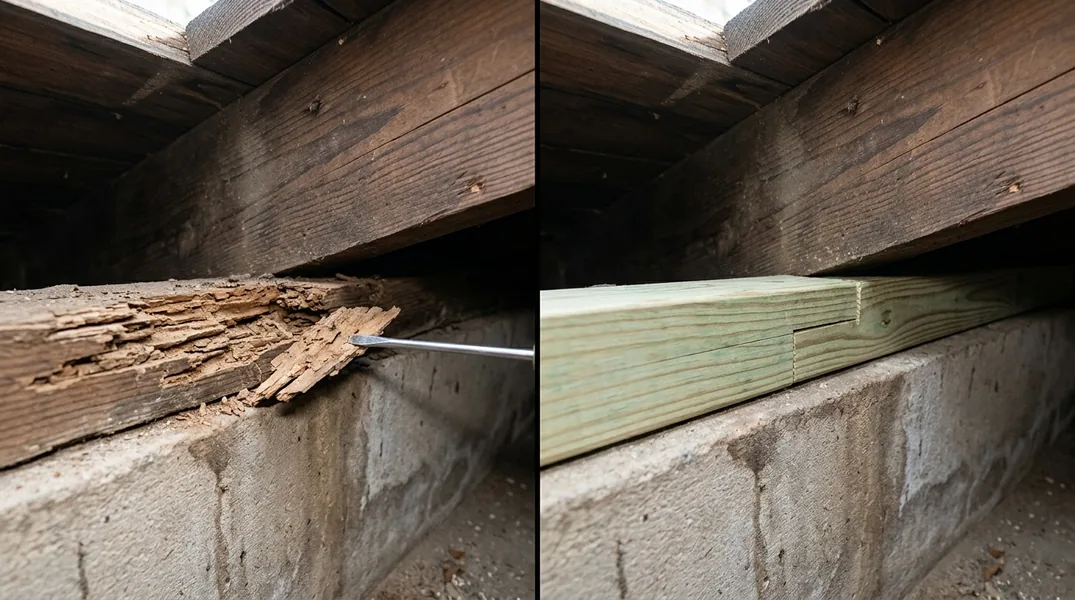
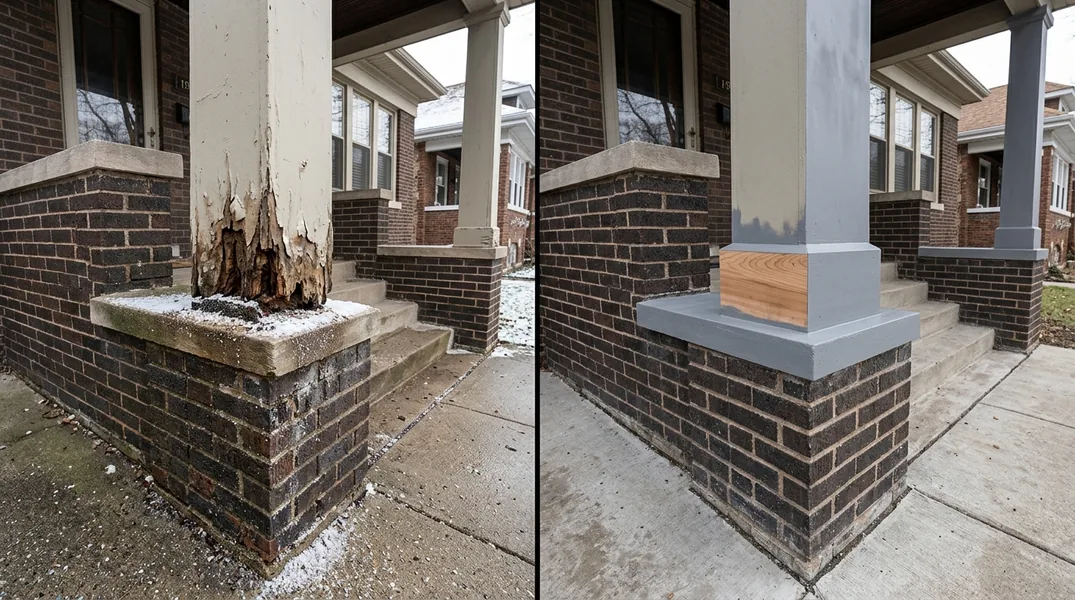
Wood fails in Chicago for specific, predictable reasons rooted in our climate. Dry rot is not a wet condition but rather a fungus that thrives in sustained moisture without standing water, and our humid continental climate with cold winters and hot summers creates exactly those conditions in wall cavities, under siding, and in rim joists where air cannot circulate freely. Wet rot appears at sill plates, window sills, thresholds, and deck ledgers where water collects and sits against wood for months at a time. Termite and wood-boring beetle damage is a real threat here, especially as humidity rises in spring and summer, and the insect damage often hides behind a paint film that still looks sound, hollowing the wood from the inside out.
We assess each failure the same way: we probe to find where sound wood begins, we check the framing behind the visible surface to understand how deep the damage runs, and we trace the water path that fed it. A member with cosmetic surface decay on a sound core can be cut out and rebuilt with new wood. A member that has lost significant section gets replaced. And this matters: if the water source is not closed, the repair fails again in a few years. Filler over rot is not a repair, and we will tell you that plainly. On insect damage, we work from your own pest inspection report and repair or replace the damaged wood. We do not treat, fumigate, or perform pest control, which is a separate regulated trade. That work belongs to a licensed pest control operator. Call (312) 685-4329 to schedule a free inspection, or read more about our Wood Rot & Dry Rot Repair and Termite Damage Repair services.
The honest call comes down to three questions: How much sound section is left in the member? Can we close the water source that caused the failure? And what do repair and replacement cost compared to each other? When both options are real, we quote both and explain the trade-offs. Sometimes a joist can be sistered to a new one; sometimes it needs to be cut out and replaced entirely. Sometimes a sill plate repair holds for decades; sometimes the rim joist behind it is too far gone and the whole section needs replacement. We explain what we find and why we recommend what we do.
Structural Carpentry in Chicago: Joists, Beams and Settling
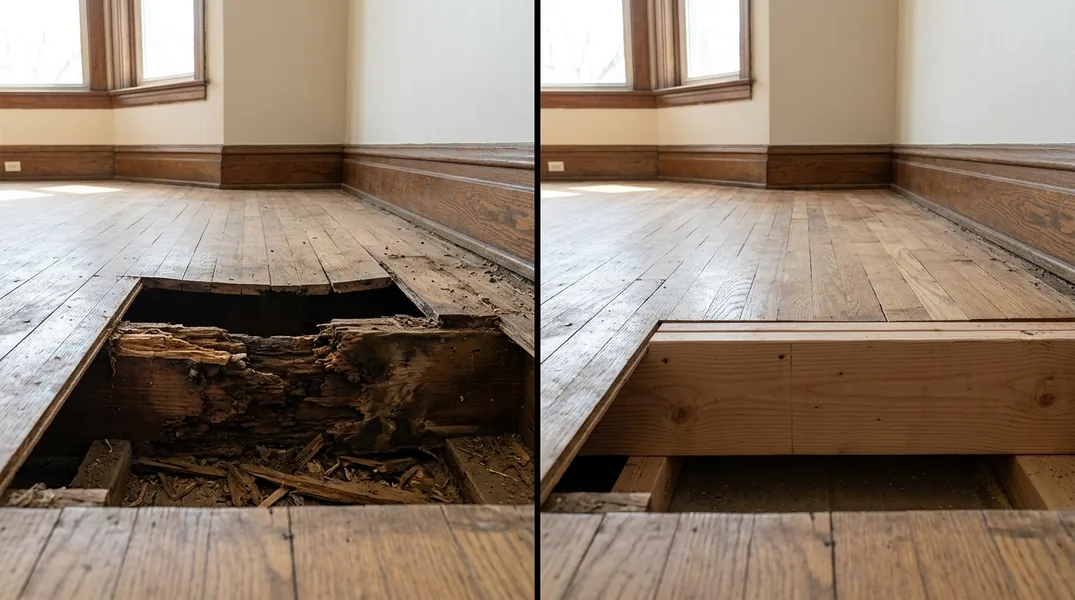
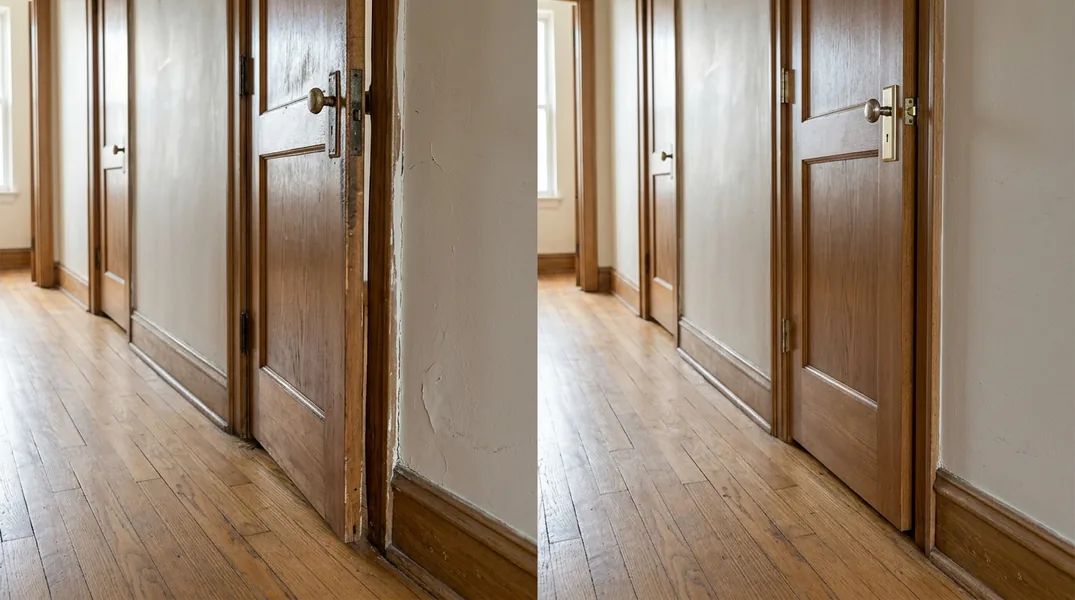
Structural carpentry in Chicago means understanding what a sloping floor or a sticking door actually tells you. A house that was built a hundred years ago and has settled slowly is in the normal condition for this city. Sloping floors, out-of-square openings, and doors that bind are the expected signature of age and gravity, not active failure. What matters is whether the framing is still moving now, and how the critical members are doing where they carry load. We assess floor joists, subfloor sections, sill plates, rim joists, and the headers and beams that carry walls and openings. If a joist is sound except for a soft section at one end, we sister a new member alongside it and tie them together. If a joist or subfloor is too compromised, we replace that section. If a sill plate is failing, we address it in place or replace it, depending on how much bearing surface is left and what the foundation condition allows.
Beam replacement and load-bearing wall removal are the highest-ticket structural work, and they require precision and planning. Beam sizing and load-bearing alterations commonly require engineered drawings from a licensed structural engineer and a permit from the local building department. We build to those drawings and to code, but we do not produce the engineering ourselves. Requirements vary by jurisdiction and by the scope of the work, so always verify with the Chicago building department before starting your project. We handle the carpentry: framing temporary supports, removing or replacing the old beam, installing the new one, and tying the framing back together. Beam Replacement & Load-Bearing Wall Removal and Floor Joist & Subfloor Repair are among our core services.
Finish Carpentry and Built-Ins in Chicago Homes
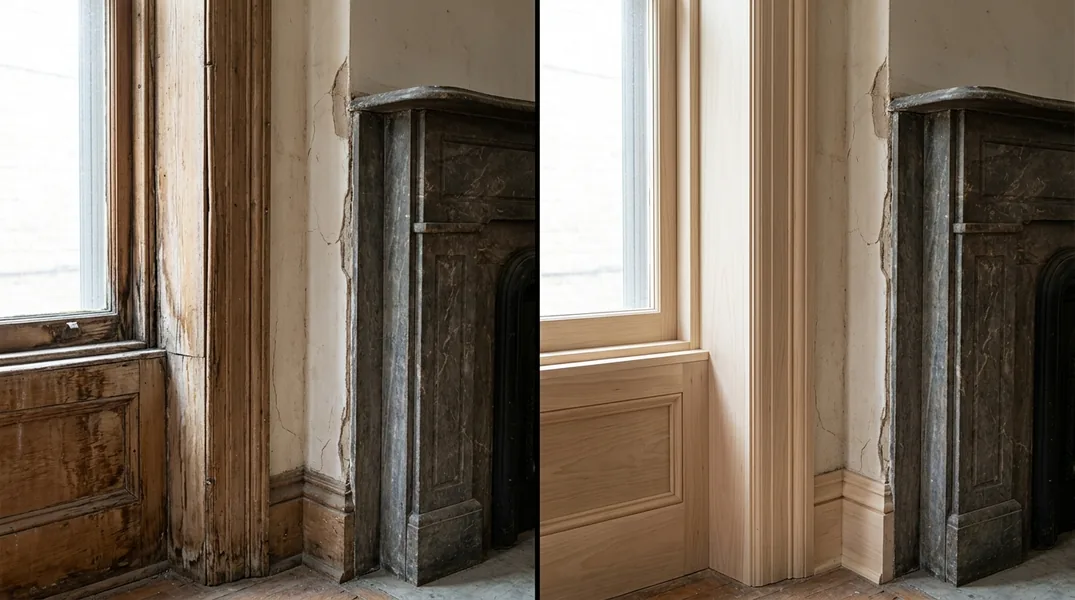
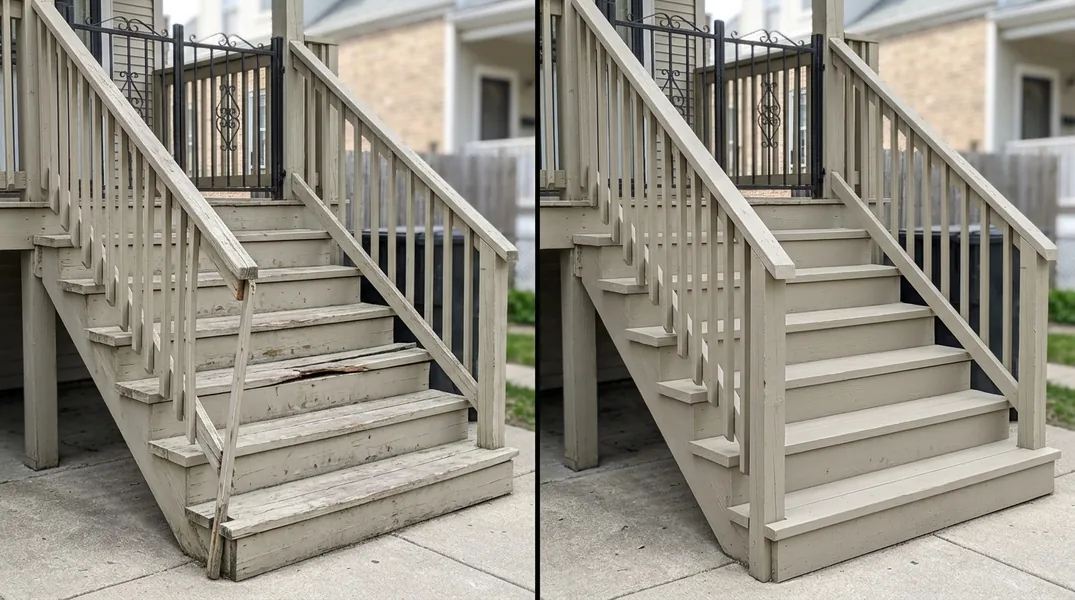
Finish carpentry is where the building becomes a home. We install casing around openings, baseboard along walls, crown molding at the ceiling line, and wainscoting where it belongs. We build custom shelving and built-ins that fit the space, hang interior and exterior doors, repair and refinish stairs and railings, and install cabinets and vanities. The craft is in the detail: coped joints instead of mitered corners that shrink and open, scribing trim to walls that are neither flat nor plumb, holding consistent reveals, and matching profiles to the period millwork that was already there. Chicago's housing stock rewards this approach. A bay window, a compact floor plan, an out-of-square opening from a century of settling, and original woodwork worth preserving rather than replacing are the norm. Finish & Trim Carpentry, Crown Molding & Baseboard Installation, and Custom Built-Ins & Shelving are services we deliver with the same carpenters from start to finish.
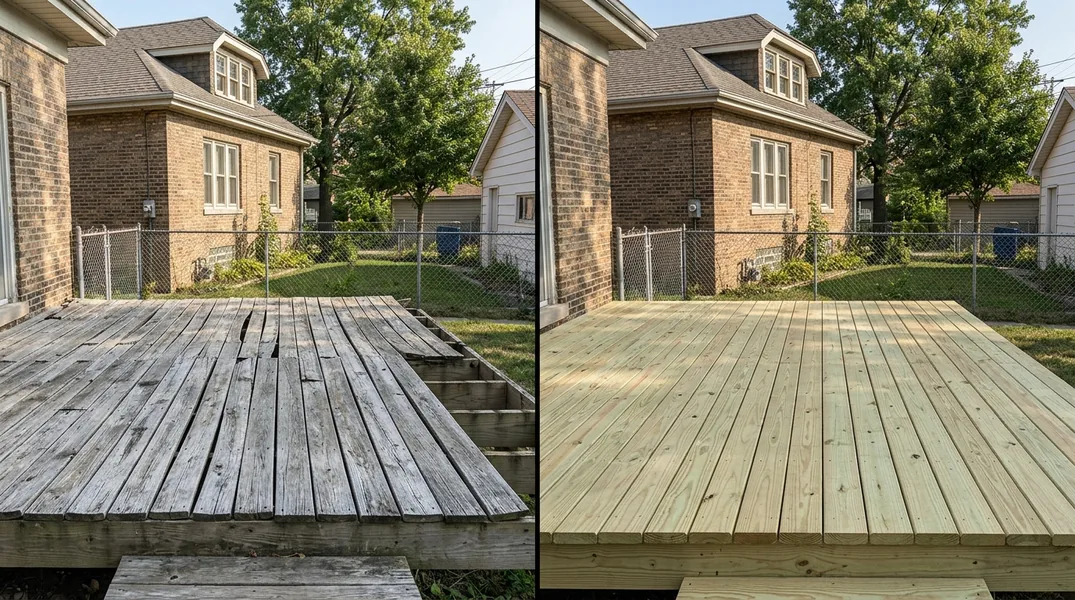
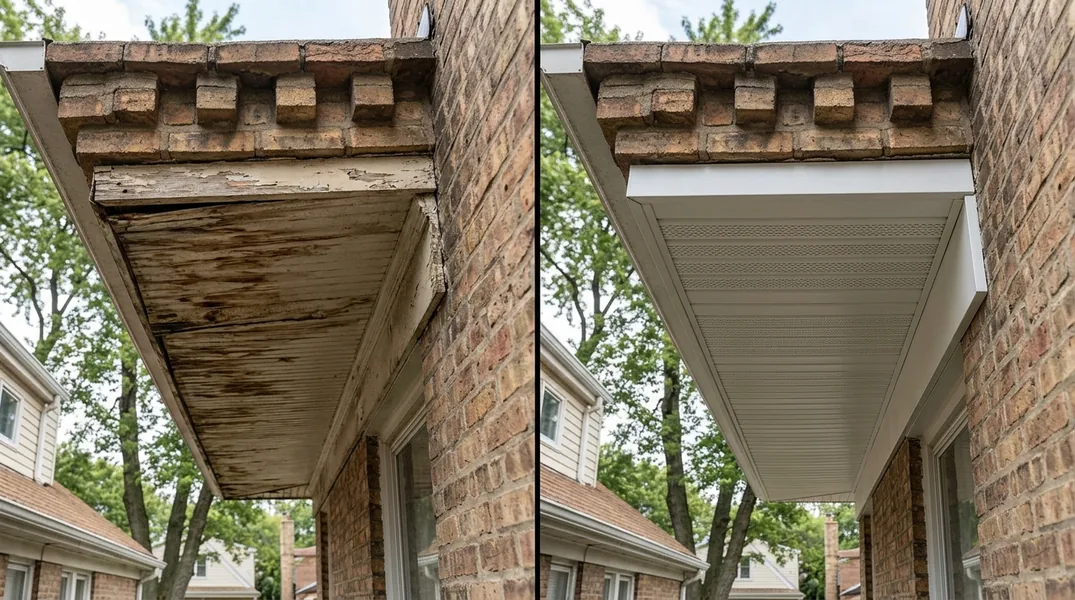
We also handle Interior Door Installation & Repair, Exterior & Entry Door Installation, Cabinet & Vanity Installation, Stair & Railing Repair, Deck & Porch Repair, and Fascia, Soffit & Exterior Trim Repair. Each project is an opportunity to make the space work better and last longer.
Permits, Repair-or-Replace & What We Do Not Do
Permits are part of responsible carpentry, and requirements vary by project and jurisdiction. A permit is commonly required for structural work such as removing or altering a load-bearing wall, replacing beams or joists, and altering exterior decks or stairs. Some jurisdictions require permits for interior finish work as well. The threshold, the process, and the inspection requirements differ from one municipality to another, so the first step is always to contact your local building department and describe the scope of work. They will tell you what you need. We build to code and to any permit requirements your project demands, and we are fully insured. We can help document damage for an insurance claim, though the decision to approve a claim and cover the work rests with your insurance company, not with us.
On the question of repair or replace, the decision is yours, but the facts are clear. We assess how much sound section remains in a damaged member, whether the water source or pest pressure can be closed, and what each path costs. When both repair and replacement are viable, we quote both. When only one makes sense, we say so and explain why. Requirements vary by jurisdiction, and the permit process is specific to your location, so always verify with the Chicago building department before starting your project.