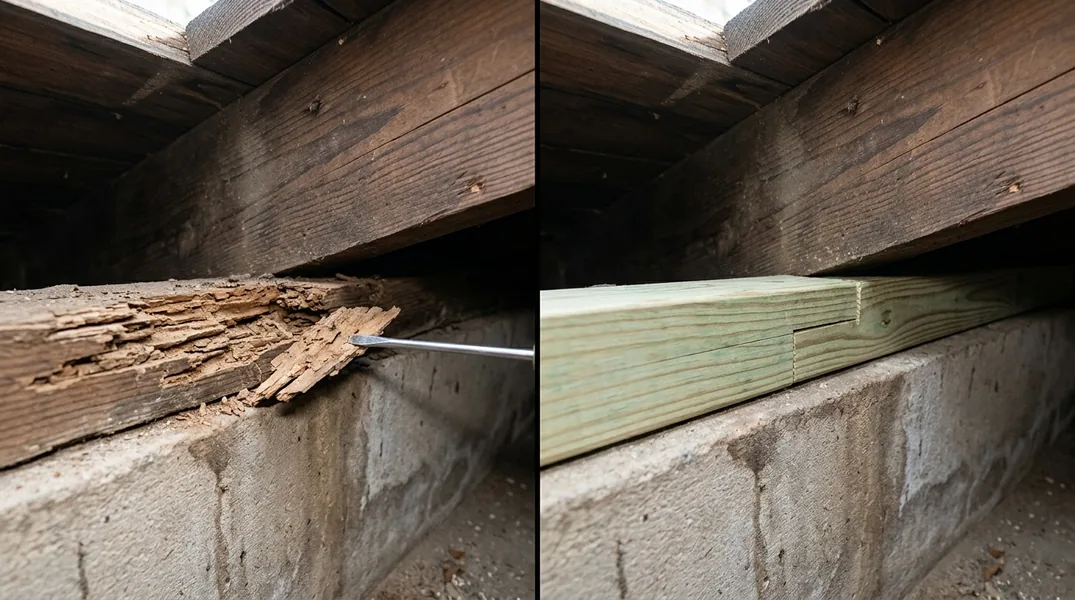
Dry Rot vs Termite Damage: Understanding the Enemy
If you own a home in Chicago, wood damage is a legitimate concern. Our region's humid summers and freeze-thaw winters create ideal conditions for both dry rot and termite infestations. Yet these two wood-destroying forces work very differently, and the repair approach depends entirely on correctly identifying which one is attacking your home.
Many homeowners assume any soft or crumbling wood means termites. Others mistake dry rot for simple water damage. The truth is that dry rot vs termite damage requires careful observation to distinguish. Both can compromise structural integrity, but they demand different treatment strategies. Understanding the difference could save you thousands of dollars and prevent further deterioration of your property.
What Does Wood Rot Look Like? The Dry Rot Profile
Dry rot is a fungal decay that thrives in damp, poorly ventilated environments. Despite its name, dry rot actually requires moisture to develop, though it can spread to seemingly dry wood. What does wood rot look like? Typically, you'll notice wood that appears darkened, shrunken, or cracked in a distinctive cube-like pattern. The affected wood becomes brittle and crumbles easily when poked with a screwdriver or knife. In advanced stages, the wood may feel spongy or hollow.
One of the most telling signs of dry rot is the presence of white, cotton-like mycelium (fungal growth) on or near the damaged wood. You might also detect a musty, earthy odor emanating from affected areas. Dry rot commonly appears in crawl spaces, basements, around windows, and in areas with poor drainage or leaking pipes. The decay spreads along the grain of the wood, which is why it can rapidly compromise structural elements like floor joists and beams if left untreated. If you suspect dry rot in your Chicago home, Wood Rot & Dry Rot Repair should be your next step.
Signs of Termite Damage in Wood: The Telltale Tunnels
Signs of termite damage in wood are distinctly different from dry rot. Termites are insects that consume wood from the inside out, leaving behind hollow galleries and tunnels. When you inspect wood infested with termites, the surface may initially appear intact, but the interior is often completely hollowed out. If you tap on affected wood, it may sound hollow or papery. Unlike dry rot's cube-like cracking pattern, termite damage creates a honeycomb-like structure inside the wood.
Another key difference is the presence of mud tubes. Subterranean termites, which are common in the Midwest, build pencil-thin mud tubes along foundation walls and wooden supports to maintain moisture while traveling between the soil and food sources. You may also notice termite droppings, which resemble fine sawdust or coffee grounds, around infested areas. Termites produce these droppings as they tunnel through the wood. Additionally, you might spot discarded termite wings near windowsills or entry points during swarming season, typically in spring. The damage pattern is often more localized than dry rot, following the grain and creating distinct feeding galleries rather than broad decay zones.
Key Differences: Wood Rot vs Termite Damage at a Glance
Understanding the core differences between these two problems is essential for proper diagnosis. Dry rot is a fungal disease that requires moisture and poor ventilation to thrive. It spreads relatively slowly but can eventually weaken entire structural members. The wood becomes darkened and brittle, and you'll often see visible fungal growth. Termite damage, by contrast, is caused by living insects actively consuming the wood as a food source. The damage can progress rapidly, especially if a large colony is present, and the wood may appear relatively normal on the outside while being completely compromised within.
The moisture requirements also differ significantly. While dry rot needs consistent dampness to spread, termites need moisture primarily to survive and travel safely. Subterranean termites must maintain contact with soil moisture, but they can cause damage to wood that is relatively dry. This means a home with good ventilation and low humidity might still fall victim to termites, whereas dry rot is unlikely to develop in those same conditions. Additionally, dry rot can spread through solid wood and even through mortar and concrete in some cases, whereas termites cannot penetrate these materials directly. When you're trying to determine wood rot vs termite damage, these distinctions will guide you toward the correct treatment.
When to Call a Professional for Wood Rot & Dry Rot Repair Near Me
If you've identified what you believe is dry rot or termite damage in your home, professional assessment is critical. While small, surface-level issues might seem manageable, both conditions can rapidly escalate and compromise the safety of your home's structure. Wood Rot & Dry Rot Repair requires not only removing the damaged wood but also addressing the underlying cause, whether that's moisture intrusion, poor ventilation, or plumbing leaks.
A qualified carpenter or structural specialist can determine the extent of damage, identify the root cause, and recommend the most cost-effective repair strategy. For termite damage, you may also need coordination with a pest control professional to eliminate the infestation before repairs begin. Chicago Carpentry has extensive experience diagnosing and repairing both types of wood damage. We can inspect your home, provide a detailed assessment, and explain your repair options. If structural elements like floor joists or beams are affected, we may recommend Floor Joist & Subfloor Repair or even Beam Replacement & Load-Bearing Wall Removal depending on the severity. Don't wait until the damage becomes catastrophic. Contact Chicago Carpentry today at (312) 685-4329 or request a free estimate to get started.
Prevention Tips: Protecting Your Chicago Home from Both Threats
The best defense against wood rot and termite damage is prevention. For dry rot, focus on moisture control and ventilation. Ensure your gutters and downspouts direct water away from your foundation. Maintain proper grading around your home so water slopes away rather than pooling near the structure. Inspect and repair any leaking pipes, faucets, or roof damage promptly. In basements and crawl spaces, use a dehumidifier to keep humidity levels below 60 percent, and ensure adequate ventilation through foundation vents or mechanical systems. Insulate cold water pipes to prevent condensation, and consider installing a vapor barrier in crawl spaces.
Termite prevention requires a different approach. Have your home inspected annually by a pest control professional, especially if you live in an older neighborhood or near wooded areas. Eliminate wood-to-soil contact by maintaining clearance between wooden structural elements and the ground. Remove dead trees, stumps, and wood debris from your property, as these attract termites. Keep mulch at least 12 inches away from your foundation. Monitor for mud tubes and other warning signs, particularly in spring and early summer. Many homeowners in Chicago benefit from preventive termite treatments applied by licensed pest control operators. By staying vigilant and addressing small problems before they escalate, you can protect your home's structural integrity and avoid costly repairs down the road.
Looking for a professional carpentry contractor in Chicago? Chicago Carpentry responds fast for all your carpentry needs.
Get a Free QuoteOur services: Wood Rot & Dry Rot Repair · Termite Damage Repair · Floor Joist & Subfloor Repair