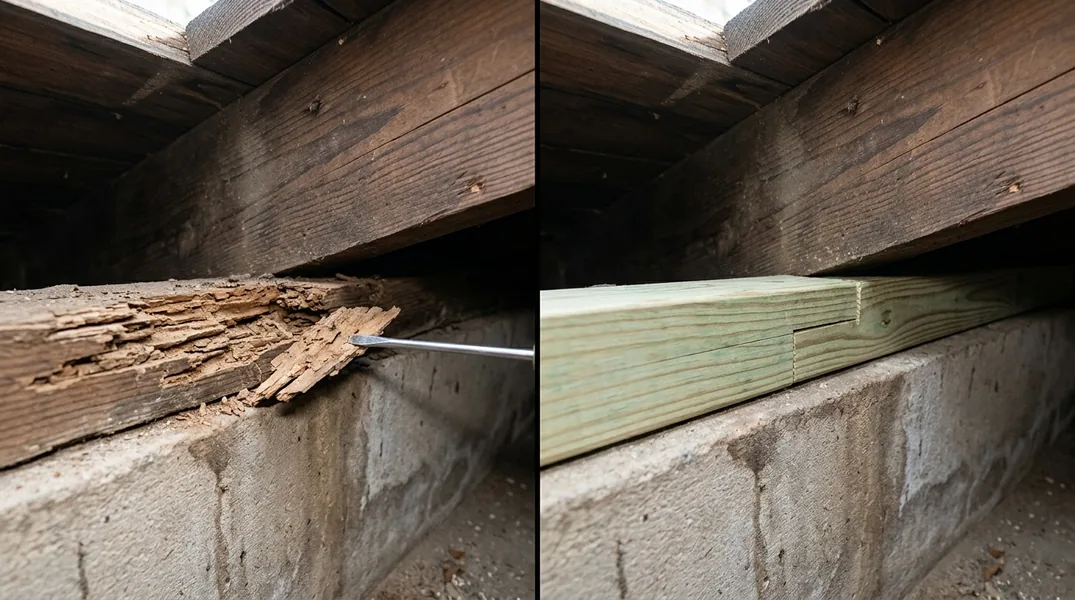
The Hard Truth: Most Homeowners Insurance Doesn't Cover Wood Rot or Termite Damage
If you've discovered wood rot in your Chicago home or suspect termite damage, your first instinct might be to call your insurance company and file a claim. Unfortunately, most standard homeowners insurance policies explicitly exclude coverage for both wood rot and termite damage. This is one of the most common misconceptions among homeowners, and it can lead to expensive surprises when damage is discovered.
Insurance companies classify wood rot and termite damage as maintenance issues or preventable problems rather than sudden, accidental events. Since homeowners insurance is designed to cover sudden and unforeseen damage (like fire, theft, or storm damage), gradual deterioration caused by moisture, pests, or age typically falls outside the scope of coverage. This distinction is critical to understand, especially in older Chicago homes where wood rot is particularly common due to the region's humidity and freeze-thaw cycles.
Why Insurance Companies Exclude Wood Rot Coverage
Wood rot develops over time due to prolonged moisture exposure, poor ventilation, or inadequate maintenance. Because the damage occurs gradually rather than suddenly, insurance companies view it as a homeowner's responsibility to maintain their property. They argue that regular inspections, proper drainage, and timely repairs could have prevented the rot from occurring in the first place. This reasoning applies whether the rot is in basement joists, exterior siding, window frames, or structural beams.
The same logic applies to termite damage. Termites don't appear overnight; they establish colonies over weeks or months. Insurance companies expect homeowners to maintain pest control measures, have regular inspections, and address infestations promptly. If you wait until structural damage is severe, your insurer will likely deny any claim, viewing the damage as a result of negligence rather than an insurable event. This is why many insurers now require regular termite inspections as a condition of coverage in high-risk areas.
Understanding the Rare Exceptions to the No-Coverage Rule
While standard homeowners insurance excludes wood rot and termite damage, there are narrow exceptions worth understanding. If wood rot develops as a direct result of a covered peril (such as a burst pipe, roof leak from a storm, or sudden water damage), your insurer may cover the resulting rot repair. For example, if a winter storm damages your roof and water seeps into your attic, causing wood rot to develop in the rafters, the rot repair might be covered under the water damage portion of your policy. However, this coverage applies only to the damage caused by the initial insured event, not to pre-existing rot that was simply exposed.
Similarly, if termites are introduced to your home as a result of a covered event (which is extremely rare), you might have a claim. In practice, these exceptions are uncommon, and most claims involving wood rot or termite damage are denied. The best approach is to review your specific policy with your insurance agent and ask explicitly whether any wood damage or pest damage is covered. Don't assume; get it in writing.
What Chicago Homeowners Should Do If They Find Wood Rot or Termite Damage
If you discover wood rot or termite damage in your Chicago home, the first step is to stop waiting for insurance to cover it and start planning repairs immediately. The longer you delay, the worse the damage becomes, and the more expensive the repairs will be. Wood rot spreads to adjacent wood, compromising structural integrity, while termites continue consuming wood silently and systematically.
Your second step should be to contact a qualified local contractor who specializes in Wood Rot & Dry Rot Repair or Termite Damage Repair. A professional assessment will determine the scope of damage, identify the root cause (moisture source or pest entry point), and recommend a repair plan. Chicago Carpentry can provide a free estimate to help you understand your options and budget for repairs. Call (312) 685-4329 to schedule an inspection.
Repair Costs and Budgeting for Wood Rot and Termite Damage in Chicago
The cost of repairing wood rot or termite damage varies significantly depending on the location, extent, and structural importance of the affected wood. Minor surface rot on exterior trim might cost a few hundred dollars to repair, while extensive damage to Floor Joist & Subfloor Repair or structural beams could easily exceed ten thousand dollars. In severe cases where load-bearing members are compromised, Beam Replacement & Load-Bearing Wall Removal may be necessary, adding substantially to the final bill.
Chicago homeowners should budget conservatively and get multiple quotes from insured contractors before proceeding. Understanding the pricing structure will help you make informed decisions about whether to repair all damage at once or phase repairs over time. Additionally, addressing the underlying cause (moisture control, pest prevention, improved ventilation) is essential to prevent future damage and protect your investment in repairs.
Protecting Your Home: Prevention is Better Than Insurance Claims
Since insurance won't cover wood rot or termite damage, the best strategy is prevention. Regular home maintenance, particularly in a climate like Chicago's, is your strongest defense. Keep gutters clean and functioning properly, ensure downspouts direct water away from your foundation, maintain proper grading around your home, and address any roof leaks immediately. Inside your home, use exhaust fans in bathrooms and kitchens to reduce humidity, and ensure crawl spaces and basements have adequate ventilation and drainage.
For termite prevention, have your home inspected annually by a pest control professional, especially if you live in an older neighborhood with many established trees. Reduce wood-to-soil contact by maintaining clearance between siding and ground, and avoid storing firewood or lumber directly against your home's exterior. These preventive measures cost far less than dealing with extensive wood rot or termite damage later. If you suspect any damage already exists, reach out to Chicago Carpentry today at (312) 685-4329 for a professional evaluation and guidance on next steps.
Looking for a professional carpentry contractor in Chicago? Chicago Carpentry responds fast for all your carpentry needs.
Get a Free QuoteOur services: Wood Rot & Dry Rot Repair · Termite Damage Repair · Floor Joist & Subfloor Repair