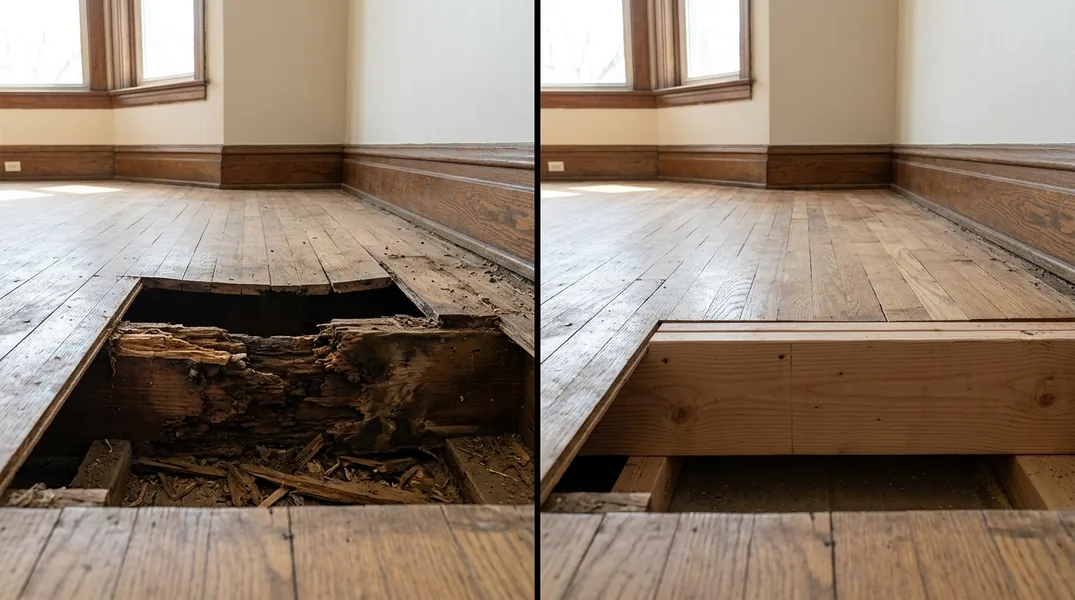
Why Chicago Bungalows Develop Sagging Floors
Chicago's classic bungalows, built primarily between 1900 and 1940, are beloved for their character and charm. Yet these charming homes often come with a serious structural challenge: sagging floors. If you've noticed your hardwood floors dipping in the middle of a room or doors that no longer close properly, you're experiencing a common problem that affects countless homeowners across Chicago.
The root causes of sagging floors in older bungalows typically stem from age, moisture, and inadequate support. Original floor joists, often made from dimensional lumber that has dried and shrunk over a century, lose their structural integrity. Additionally, basements in many Chicago bungalows are prone to moisture infiltration due to clay soil conditions and aging foundation walls. This moisture exposure can lead to Wood Rot & Dry Rot Repair issues that further weaken the structural support system beneath your floors.
Another common culprit is inadequate or deteriorating support posts and beams in the basement. Many older homes were built with minimal support columns, and those that do exist may have settled, rotted, or simply failed to prevent the natural sagging that occurs over decades. Foundation settlement, though often minor, compounds the problem by shifting the load-bearing walls and joists that hold up your floor system.
Identifying the Severity of Floor Sagging
Not all sagging floors require immediate attention, but knowing the difference between cosmetic settling and structural danger is crucial. A slight, barely noticeable dip across a room might simply be the natural result of a century of gravity and use. However, pronounced sagging, visible waves in hardwood flooring, or a floor that feels spongy underfoot are red flags that warrant professional evaluation.
The best way to assess your floor is to look for visual cues and perform simple tests. Walk across the affected area and note whether you feel a distinct sag or bounce. Check whether doors and windows in the room stick or no longer fit properly in their frames. Look at the basement or crawl space below, if accessible, to see whether support posts appear to be leaning or whether you notice obvious gaps between the joists and beams. If you spot evidence of Wood Rot & Dry Rot Repair damage, pest activity like Termite Damage Repair concerns, or water stains on structural members, the situation is more serious and requires expert attention.
Measuring the actual degree of sag can help you communicate the problem to a contractor. Use a long, straight board or laser level across the sagging area to quantify how much the floor has dropped. Even a measurement of half an inch over a 10-foot span indicates structural concern. Chicago Carpentry recommends documenting these observations with photos and measurements before contacting a professional, as this information helps contractors prioritize repairs and provide accurate estimates.
Floor Joist Repair and Sistering Joists: Common Solutions
Floor Joist & Subfloor Repair is one of the most effective ways to address sagging floors in older homes. When floor joists have weakened due to age, moisture, or damage, a repair technique called sistering can restore structural integrity without requiring complete replacement. Sistering involves fastening a new, pressure-treated or solid wood member alongside the existing joist to share the load and reinforce the weakened beam.
The sistering process requires careful planning and execution. A qualified carpenter must first assess the condition of the existing joist to determine whether it can be salvaged or must be replaced entirely. If salvageable, the new sister joist is cut to length and positioned tightly against the original member, then secured with bolts, lag screws, or modern structural fasteners spaced according to building code requirements. This method is less invasive than full joist replacement and often allows homeowners to remain in their homes during the repair, though access to the basement or crawl space is necessary.
In some cases, multiple joists may need sistering, particularly if sagging spans a large area or if the damage is widespread. This is where professional expertise becomes invaluable. Contractors must calculate load distribution, ensure proper spacing, and verify that the repair meets current building codes. Chicago Carpentry has extensive experience with Floor Joist & Subfloor Repair in older Chicago homes and can determine whether sistering is appropriate for your situation or whether additional support measures are needed.
When You Need Beam Replacement or Additional Support
In some cases, sagging floors indicate that the primary support beams in the basement or crawl space have failed or are inadequate. When sistering joists alone cannot resolve the problem, Beam Replacement & Load-Bearing Wall Removal may be necessary. This is a more involved repair that typically requires temporary support walls to be installed during the work, allowing the damaged or inadequate beam to be removed and replaced.
Beam replacement is not a DIY project and should only be performed by licensed, experienced contractors. The process involves calculating the load that the beam must support, installing temporary support structures to carry that load safely during construction, removing the old beam, and installing a new one that meets or exceeds current building code requirements. In many cases, contractors use steel beams or engineered lumber that is stronger and more durable than the original wood members, providing superior long-term performance.
Additionally, if support posts in the basement are undersized, deteriorated, or improperly positioned, they may need to be reinforced or replaced. Some older homes benefit from the installation of new support posts or adjustable posts that can be used to gradually lift sagging floors back to their original height. This process must be done slowly and carefully to avoid causing damage to the structure or finishes above. A professional assessment is essential before undertaking any beam or post work.
Sagging Floor Repair Cost in Chicago: What to Budget
The cost of repairing sagging floors varies significantly depending on the extent of damage, the repair method chosen, and the complexity of your home's structure. For homeowners considering pricing on floor repairs, it's important to understand that a professional inspection is the first step in determining realistic costs. A single sistered joist might cost between $800 and $2,000, while sistering multiple joists across a larger area could range from $3,000 to $8,000 or more. Full beam replacement, which is more labor-intensive and may require temporary support structures, typically costs between $5,000 and $15,000 depending on the beam's length and the complexity of the installation.
Several factors influence the final cost of your repair. The accessibility of the damaged joists or beams affects labor time and complexity. If your basement is finished or cluttered, contractors may need more time to set up and work safely. The extent of wood rot or pest damage discovered during the inspection can increase costs if additional repairs become necessary. Additionally, if your home requires permits and inspections from the city, those fees should be factored into your budget. Chicago Carpentry always provides transparent estimates that break down labor, materials, and any permits or inspections required.
Rather than viewing floor repair as an expense to minimize, consider it an investment in your home's structural integrity and safety. Delaying repairs can lead to more extensive damage, higher costs down the road, and potential safety hazards. If you're concerned about sagging floors in your Chicago bungalow, contact Chicago Carpentry at (312) 685-4329 to schedule a free estimate. Our team will inspect your home, identify the root cause of the sagging, and provide a detailed quote for the repair work needed.
Why Professional Inspection Matters for Chicago Bungalow Owners
Attempting to diagnose or repair sagging floors without professional expertise can be dangerous and costly. A qualified structural carpenter or engineer can identify not only the immediate cause of the sag but also underlying issues that may not be immediately visible. For example, a floor that sags due to a rotted beam might also have undetected mold growth, compromised foundation elements, or additional structural weaknesses that require attention.
Chicago Carpentry brings decades of experience working with the specific structural challenges that plague Chicago's older homes. Our team understands the local soil conditions, building practices of the early 1900s, and the unique ways that moisture and age affect homes in this region. During a professional inspection, we assess the condition of joists, beams, support posts, and the foundation itself. We look for signs of wood rot, insect damage, moisture problems, and structural settling. This comprehensive evaluation ensures that the repair plan addresses all contributing factors, not just the most obvious symptom.
Getting a professional inspection also protects you from unnecessary work. Sometimes a floor that appears to sag significantly may only require minor adjustments to support posts or localized joist reinforcement, rather than extensive repairs. Conversely, a subtly sagging floor might indicate a serious foundation issue that requires immediate attention. Only a thorough professional evaluation can distinguish between these scenarios. Call Chicago Carpentry at (312) 685-4329 today to discuss your sagging floor concerns and arrange a detailed inspection of your home.
Looking for a professional carpentry contractor in Chicago? Chicago Carpentry responds fast for all your carpentry needs.
Get a Free QuoteOur services: Wood Rot & Dry Rot Repair · Termite Damage Repair · Floor Joist & Subfloor Repair