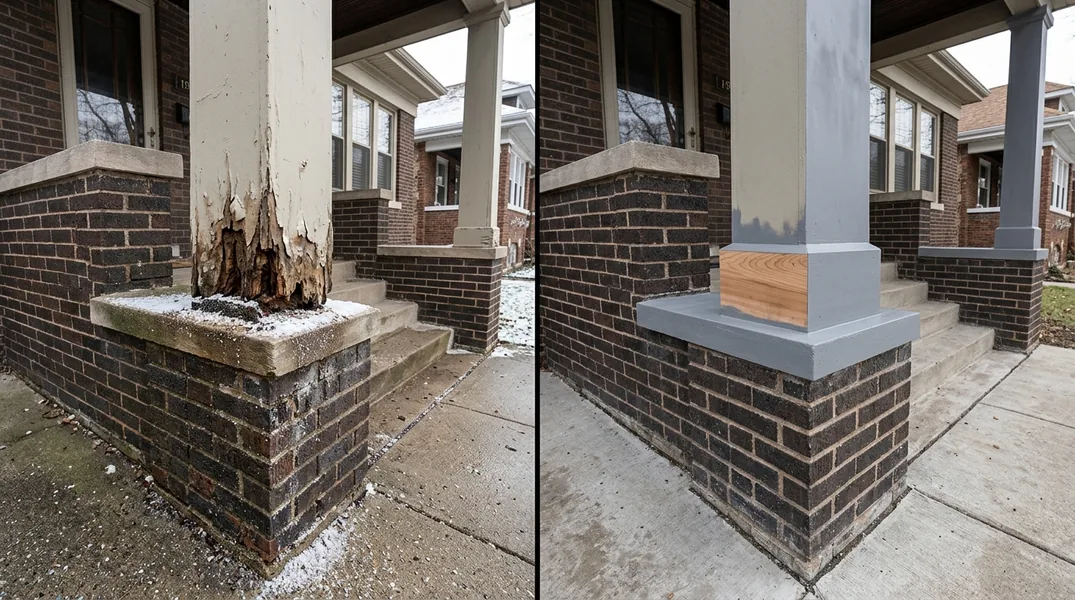
The Freeze-Thaw Cycle: Why Chicago Winters Are Brutal on Wood
Chicago's winter weather is uniquely destructive to wood structures. The city experiences dramatic temperature swings, especially in late fall and early spring, when daytime highs might reach 40 degrees Fahrenheit while nights plummet below freezing. This constant cycle of freezing and thawing creates enormous stress on wood, particularly exterior wood that's exposed to the elements.
When water penetrates wood fibers and then freezes, it expands with tremendous force. This expansion cracks the wood from the inside out, creating tiny fissures that are invisible to the naked eye but devastating to the wood's integrity. When temperatures rise again, the ice melts and leaves behind gaps and cavities. Over multiple winter cycles, these gaps widen and deepen, eventually allowing moisture to settle permanently inside the wood. Once moisture is trapped within the wood structure, the conditions are perfect for wood rot fungi to take hold and begin breaking down the cellulose that holds the wood together.
Understanding Wood Rot vs. Dry Rot: What's the Difference?
Many homeowners use the terms 'wood rot' and 'dry rot' interchangeably, but they're actually different problems requiring different approaches. Wood rot, also called wet rot, occurs when wood is exposed to high moisture levels for extended periods. The fungi that cause wet rot thrive in damp conditions and spread relatively slowly, but they weaken the wood significantly. Dry rot, on the other hand, is a more aggressive form of fungal decay that can spread rapidly through wood even when the wood appears dry to the touch.
Dry rot is particularly dangerous because it can travel through masonry and spread to seemingly unaffected wood. A homeowner might notice signs of wood rot in one area, only to discover that the fungus has already colonized other parts of the structure. Both conditions thrive in the cool, damp conditions that Chicago's winter creates. The freeze-thaw cycle doesn't just cause initial damage; it creates the exact environment where both wet rot and dry rot fungi flourish, making winter the most critical season for wood protection and inspection.
Signs of Wood Rot: What Chicago Homeowners Should Watch For
Catching wood rot early is essential to preventing expensive structural repairs. The most obvious signs of wood rot include soft or spongy wood that yields easily to pressure, visible discoloration or darkening of the wood surface, and a musty smell near affected areas. You might also notice paint peeling or bubbling on exterior wood, which often indicates that moisture has penetrated beneath the surface. Wood rot frequently appears around windows, door frames, roof edges, deck boards, and siding where water naturally accumulates and sits.
Don't ignore small warning signs. A soft spot the size of a quarter on a deck board or a patch of discoloration on fascia boards can indicate that rot has already begun eating away at the wood's interior. Homeowners should inspect exterior wood surfaces regularly, especially after heavy rains or during the spring thaw when meltwater is abundant. If you press a screwdriver or awl into suspect wood and it sinks in more than a quarter inch, that's a strong indication of advanced rot that needs professional attention immediately.
Exterior Wood Rot Repair: Protecting Your Home's Structure
Exterior wood rot repair isn't something homeowners should attempt with store-bought wood filler and paint. Once rot has established itself, the structural integrity of the wood is compromised, and temporary fixes will only delay the inevitable collapse or further deterioration. Professional repair involves removing the affected wood entirely, treating the surrounding area to prevent fungal spread, and replacing the damaged sections with new, properly sealed wood or appropriate alternatives like composite materials that resist moisture.
The scope of exterior wood rot repair depends entirely on how far the damage has progressed. Caught early, repairs might be limited to a single board or trim section. Left untreated, rot can spread to structural components like roof trusses, wall framing, or foundation sills, turning a simple repair into a major structural overhaul. This is why homeowners in Chicago should act quickly when they suspect wood rot. The cost of addressing the problem now is a fraction of what it will cost if the rot spreads to load-bearing elements of your home.
Prevention Strategies: How to Minimize Winter Damage
The best defense against wood rot is prevention. Ensure all exterior wood is properly sealed with high-quality exterior paint or stain designed to repel water. Check caulking around windows, doors, and trim annually, and recaulk any gaps or cracks before winter arrives. Gutters and downspouts should direct water at least four feet away from your foundation; clogged gutters are one of the primary culprits allowing water to pool and penetrate wood structures. Consider installing gutter guards to keep debris from accumulating and reducing water flow.
Proper drainage around your home is equally important. Grade the soil so that water slopes away from your foundation rather than pooling against it. Ensure that wood trim, deck boards, and siding are not in direct contact with soil or mulch, as these materials wick moisture up into the wood. If you have wooden deck posts or porch supports, install metal flashing between the wood and any concrete or stone base to prevent water from being absorbed from below. These preventive measures won't eliminate the risk entirely, but they significantly reduce the likelihood that freeze-thaw cycles will cause serious damage to your home's wooden components.
Wood Rot & Dry Rot Repair Near Me: When to Call a Professional
If you've identified potential wood rot on your property, don't wait for the problem to worsen. Wood Rot & Dry Rot Repair requires professional expertise because the diagnosis is often more complex than it appears. A carpenter experienced in rot repair can determine whether you're dealing with surface damage or deep structural compromise, identify the moisture source that allowed the rot to develop, and recommend the most cost-effective repair approach. They'll also ensure that the repaired area is properly sealed and treated to prevent recurrence.
Chicago Carpentry specializes in identifying and repairing wood rot damage caused by the region's harsh winters. Our team understands the specific challenges that freeze-thaw cycles create for homeowners in this area, and we know how to repair damage properly so it stays repaired. If you've noticed soft wood, discoloration, or any other signs of rot on your property, contact us for a free estimate. You can reach Chicago Carpentry at (312) 685-4329 to schedule an inspection. The sooner you address wood rot, the less damage it will cause to your home's structure and the less you'll ultimately spend on repairs.
Looking for a professional carpentry contractor in Chicago? Chicago Carpentry responds fast for all your carpentry needs.
Get a Free QuoteOur services: Wood Rot & Dry Rot Repair · Termite Damage Repair · Floor Joist & Subfloor Repair